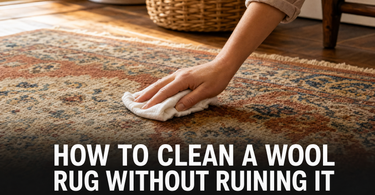
Wool is durable, but it's also protein fiber — and protein fiber responds badly to heat, alkaline chemicals, and mechanical agitation. Most wool rug damage happens during cleaning, not from use. Here's how to avoid the common mistakes.
Table of Contents
Regular Vacuuming: Do It Right
Vacuuming is the most important maintenance task. Grit and soil that accumulate in the pile act as abrasive particles under foot traffic, cutting fiber. Removing them regularly protects the rug.
How to vacuum a wool rug correctly:
- Use suction only — no rotating beater bar on the pile surface. The beater bar breaks wool fibers and accelerates shedding.
- Vacuum in the direction of the pile, not against it. Run your hand across the pile to find which way it lies flat — vacuum with that direction.
- Vacuum the back of the rug occasionally. Turn it over and vacuum the foundation — this removes embedded grit that surface vacuuming misses.
- Keep the fringe out from under the vacuum head. Vacuuming fringe tangles and tears it.
- Frequency: high-traffic rooms, once a week. Low-traffic rooms, every 2 weeks.
"At RugKnots, we've been importing and selling hand-knotted rugs since 1987. The right rug doesn't just tie a room together—it sets the foundation for how you live in that space."
Spot Cleaning: The First 60 Seconds Matter
How you handle a spill in the first minute determines whether it becomes a stain. The goal is removing the spill before it sets into the fiber or the foundation.
For liquid spills:
- Blot immediately with a clean, dry white cloth. Press firmly — don't rub. Rubbing spreads the spill and works it deeper into the pile.
- Work from the outside of the spill toward the center to prevent spreading.
- Continue blotting with dry sections of the cloth until you've absorbed as much as possible.
- Mix one teaspoon of dish soap (pH-neutral, no bleach) with one cup of cool water. Apply a small amount to the stain and blot again.
- Rinse by blotting with plain cool water — remove all soap residue. Soap left in wool attracts soil and leaves a sticky residue.
- Lay a dry towel over the damp area and weight it. Let it absorb remaining moisture for several hours.
For solid spills (food, mud): Let it dry first if possible. Dried solid material is easier to lift than wet, which smears. Once dry, scrape it gently with a spoon or dull knife, then treat any remaining stain as a liquid spill.
What Not to Use on Wool
- Hot water: Hot water causes wool to shrink and felt. Always use cool or lukewarm water.
- Bleach or products containing bleach: Bleach destroys protein fiber. Even diluted bleach will damage wool.
- Alkaline cleaners: Wool is protein fiber and is damaged by high-pH products. This includes baking soda pastes (pH ~9), ammonia-based cleaners, and many all-purpose household cleaners. Check the label — you want pH 5–8 for wool.
- Rubbing or scrubbing: Friction causes wool fiber to felt and mat. Blot only.
- Steam cleaners: The combination of heat and moisture causes shrinkage and potential dye bleeding. Not recommended for wool rugs.
- Enzyme cleaners (for pet accidents): These break down protein — which includes wool. Enzyme cleaners designed for pet urine can damage wool fiber. Use products specifically formulated as wool-safe.
Dealing With Pet Urine
Urine is particularly damaging to wool rugs because it's alkaline when fresh and becomes more so as it dries. It also penetrates through the pile to the foundation and the rug pad underneath. Surface cleaning alone is insufficient.
Steps for fresh urine: blot everything you can, then flush with cool water (lift the rug edge and pour clean water through from the back), blot again, then apply a wool-safe enzymatic cleaner if you can find one, or a diluted white vinegar solution (1:3 vinegar to water) to neutralize alkalinity. Get it professionally cleaned as soon as possible.
Dried urine: requires professional wet cleaning. The damage to the foundation and the dye (urine can cause dye migration) needs expert treatment.
Professional Cleaning: When and How Often
Even with perfect spot-cleaning at home, wool rugs benefit from professional cleaning every 2–3 years for rugs in regular use, every 4–5 years for low-traffic rooms.
Look for a rug cleaner who offers plant-based or facility-based wet cleaning — immersion in clean water, gentle agitation, and controlled drying. Avoid cleaners who propose steam cleaning or dry-compound cleaning for wool pile rugs; these methods are designed for wall-to-wall carpet, not handmade area rugs.
A good professional cleaner will also treat for moths, inspect for structural issues, and re-block the rug (re-square it if it's deformed slightly after cleaning).
Drying: Critical and Often Overlooked
Wool that stays damp develops mildew and rot. After any wet cleaning — spot treatment or professional — the rug must dry completely, including the foundation.
- After professional cleaning, don't lay the rug flat on the floor until it's fully dry. Prop it or hang it to allow airflow under and over.
- Avoid direct sunlight during drying — UV exposure can fade natural dyes significantly.
- Use fans to accelerate drying in humid conditions.
Related Articles
- Wool Rug vs Synthetic: The Honest Comparison
- How Long Do Wool Rugs Last? What to Expect
- How to Wash a Rug in the Washing Machine: The Right Way
Frequently Asked Questions
Are these rugs durable?
Yes, they are designed for durability and long-lasting wear, especially in high-traffic areas.
How do I clean this type of rug?
Regular vacuuming without a beater bar is recommended. For specific spills, spot clean immediately with mild soap and water.
Do I need a rug pad?
Yes, we always recommend a high-quality rug pad to prevent slipping, add cushioning, and extend the life of your rug.
Are they safe for pets and kids?
Absolutely. The materials are safe, and the construction is designed to withstand active households.
Can these rugs be used outdoors?
Unless specifically marked as an indoor/outdoor rug, we recommend keeping them indoors to prevent weather damage.
Related Buying Guides
- Bedroom Rug Size Guide
- Best Rugs for Dog Owners (2026 Guide)
- Wool vs Polypropylene: Honest Comparison
About RugKnots
RugKnots is a family-owned rug company based in Hagerstown, Maryland. Founded in 2010, we've spent over 14 years helping homeowners and designers find the right rug — from hand-knotted Persian heirlooms to durable machine-made everyday pieces. We hand-inspect every order before it ships, offer free U.S. shipping, and back every purchase with our 30-day return guarantee.
This article was written by our editorial team and reviewed for accuracy. Our writers work directly with our buyers and customer-experience team, who handle thousands of rug questions every year. If you have a question this article didn't answer, reach out — a real human will get back to you within one business day.