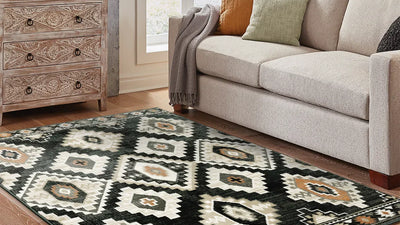
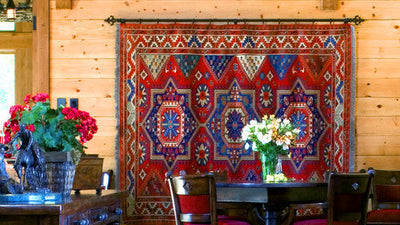
The farmhouse aesthetic has staying power for good reason: it is warm, layered, and livable. But finding a rug that fits the style without looking like a catalog cliché requires knowing which materials and patterns actually work — and which ones are overused or poorly suited to real farmhouse interiors.
What Makes a Farmhouse Living Room Rug Work
A farmhouse rug needs to do several things simultaneously: ground the seating area, add warmth to a room that often features a lot of hard, natural surfaces, and look appropriately worn-in rather than too perfect. Farmhouse style is not about pristine showroom pieces — it is about things that look like they have a history.
The core principles:
- Natural materials or natural-looking textures
- Patterns that have a handcrafted or vintage feel rather than a computer-generated precision
- Colors that are faded, warm, or earthy rather than saturated and bright
- Scale appropriate for the room — farmhouse living rooms often have large seating areas that need a substantial rug
Jute Rugs: The Farmhouse Foundation
Jute is the quintessential farmhouse material. Its natural golden-beige color and visible fiber texture work with virtually every farmhouse color palette and furniture combination. A well-woven jute rug has a warmth and character that no synthetic can replicate.
Where jute works best:
- Under a large coffee table and sofa grouping in a room with wood floors
- In a farmhouse living room with shiplap walls and exposed wood beams — jute echoes the natural material palette
- In rooms with a lot of white — jute's warmth prevents the room from feeling cold
Practical considerations for jute:
- Jute does not handle moisture well — avoid in spaces with frequent spills or pets
- Jute sheds initially and requires regular vacuuming
- Not recommended for rooms with children under five who spend significant time on the floor — the texture can be rough on skin
Distressed Persian Rugs: Character and Pattern
A distressed or vintage-style Persian rug is perhaps the most sophisticated farmhouse choice. The faded patterns, worn-in appearance, and rich (but muted) colors add history and personality that pure natural fiber rugs cannot provide.
What to look for in a farmhouse-appropriate Persian style:
- Faded, washed-out colors — particularly faded blues, terra cottas, and reds that have aged to a dusty, muted version of themselves
- Visible distressing or intentional wear in the pattern — power-loomed distressed rugs achieve this look at a fraction of the cost of antique rugs
- Medallion or all-over vine patterns rather than highly geometric designs, which lean more traditional than farmhouse
Pairing distressed Persian with farmhouse elements:
- Under a reclaimed wood coffee table with a linen sofa — classic farmhouse combination
- In a room with exposed brick or stone fireplace — the rug's age echoes the architectural character
- Layered over jute — a trend that works well when the Persian rug is smaller and positioned to show the jute border
Cotton Stripe Rugs: Clean Farmhouse Lines
Ticking stripe and simple cotton stripe rugs are a cleaner, more restrained farmhouse choice. They work particularly well in farmhouse interiors that lean slightly toward the modern side — less layered and rustic, more organized and airy.
Stripe patterns that work:
- Classic ticking stripe in black and white or navy and white
- Multi-stripe in warm neutrals (cream, tan, oatmeal, gray)
- Wide block stripes in two tones — more graphic and contemporary farmhouse
Pairing Rugs with Shiplap and Wood Beams
Two of the most common farmhouse architectural elements — shiplap walls and exposed wood ceiling beams — create a very specific material palette that the rug needs to complement rather than compete with.
- With shiplap: Shiplap reads as clean, linear, and white-dominant. Balance it with a rug that adds warmth and texture — jute, a faded Persian, or a warm-toned stripe all work well
- With exposed wood beams: The wood introduces a natural, organic element. Echo it with a jute or sisal rug, or choose a rug in warm earth tones that pick up the wood color
- With both shiplap and beams: You have significant texture and material already. A simpler rug — solid color or subtle pattern — often works better than a busy pattern rug in these richly textured rooms
Sizing for Farmhouse Living Rooms
Farmhouse living rooms tend to be generous in scale. The most common mistake is under-sizing the rug:
- At minimum, all front legs of seating furniture should rest on the rug
- Ideally, all legs of all furniture in the seating grouping rest on the rug
- For most farmhouse living rooms: 8x10 or 9x12 is the appropriate size range
Related Articles
- Best Farmhouse Rug Colors: Neutral Palette Guide
- Farmhouse Kitchen Rugs: Style + Function in One
- Polypropylene vs Wool Rugs: Which Should You Choose?
About RugKnots
RugKnots is a family-owned rug company based in Hagerstown, Maryland. Founded in 2010, we've spent over 14 years helping homeowners and designers find the right rug — from hand-knotted Persian heirlooms to durable machine-made everyday pieces. We hand-inspect every order before it ships, offer free U.S. shipping, and back every purchase with our 30-day return guarantee.
This article was written by our editorial team and reviewed for accuracy. Our writers work directly with our buyers and customer-experience team, who handle thousands of rug questions every year. If you have a question this article didn't answer, reach out — a real human will get back to you within one business day.
Ready to shop? shop farmhouse rugs — 400+ styles in jute, cotton & distressed looks, with free shipping & 30-day returns.