



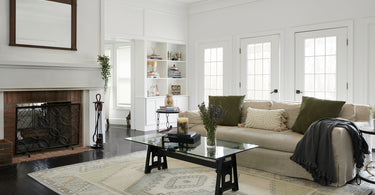
Quick answer: how to choose a rug for a living room. Measure the seating area, not the room. Pick a size that lets at least the front legs of every sofa and chair sit on the rug (an 8x10 for most living rooms, a 9x12 for large ones) and leaves 12 to 18 inches of bare floor at the walls. Choose a durable, easy-care fiber such as wool or a performance synthetic. Match the color to your sofa and walls, size the pattern to the room, and add a rug pad.
- Size: wider than the sofa, front legs on, 12–18 in border.
- Layout: all legs on, front legs on, or floating.
- Material: wool or performance for traffic; low pile for doors and chairs.
- Color and pattern: pull one tone from the sofa or walls; mid-tones hide wear.
- Finish: a rug pad an inch smaller than the rug on each side.

The living room rug is the one piece of decor everything else sits on, literally. Get it right and the sofa, chairs and coffee table read as one group; get it wrong and even expensive furniture looks like it is floating in a waiting room. The decisions below are in the order that matters: size first, because the wrong size cannot be styled around; then material, because the living room takes more traffic than any other room; then color, pattern and shape, which are the fun part.
How to Pick the Right Size Rug for Your Living Room
Start with a tape measure and painter's tape, not a catalog. Measure the footprint of your seating group from the back legs of the sofa to the back legs of the chairs facing it, then add the space you want showing beyond the furniture. Most people land on one rule: the rug should be at least as wide as the sofa, ideally 6 inches or more wider on each side, so the sofa never hangs over the edge. Tape the outline on the floor and walk around it for a day before you buy.
Living room rug size chart by room dimensions
| Room size | Rug size | Typical layout |
|---|---|---|
| Up to 10x12 ft (apartment, small den) | 5x8 or 6x9 | Front legs of a loveseat or small sofa on the rug |
| 11x13 to 12x15 ft (average living room) | 8x10 | Front legs of sofa and two chairs on the rug |
| 13x16 to 15x18 ft (large living room) | 9x12 | All legs of sofa and chairs on the rug |
| 16x20 ft and up (great room, open plan) | 10x14 or 12x15 | All legs on, or two rugs to zone the space |
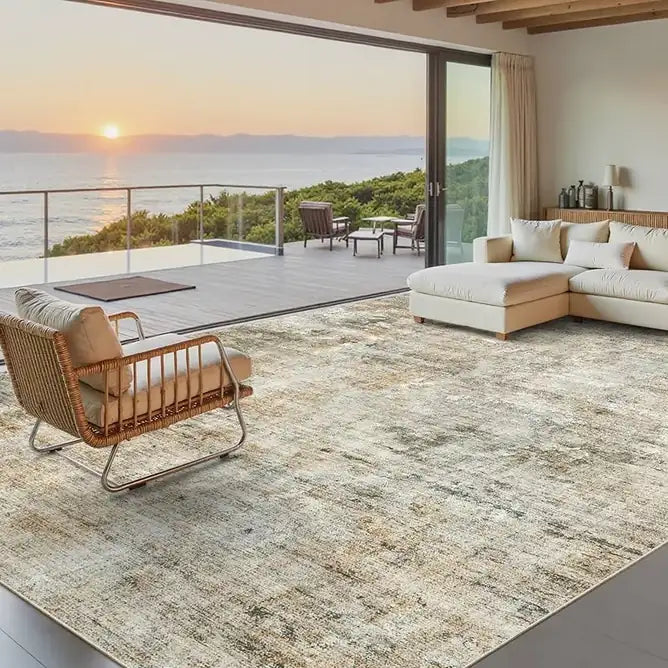
Two adjustments to the chart. In an open-plan space, size the rug to the seating group, not the whole room, and let the rug edges define where "living room" ends. And if you are between sizes, go bigger: a rug that is slightly too large looks generous, while one that is slightly too small looks like a mistake. Our living room rug size guide goes deeper into the measurements, and the 8x10 guide shows the most common size in real rooms.
The three living room rug layouts

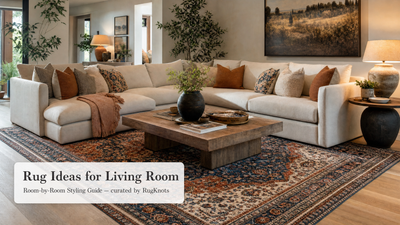
All legs on. Every piece of seating sits fully on the rug with 12 to 18 inches of bare floor between the rug and the walls. It is the most finished, formal look and needs the largest rug, usually a 9x12 or 10x14. Front legs on. The front legs of the sofa and chairs rest on the rug and the back legs sit on the floor. This ties the group together with an 8x10 in most rooms and is the layout designers use most. Floating. The rug sits under the coffee table only, with all furniture legs off. It works in very small rooms with a 5x8, or when the sofa is pushed against a wall, but the rug must still be wider than the sofa or it will look like a bath mat.
What size rug for a sectional sofa?
A sectional is wide in two directions, so the rug has to be too. Measure the outside length of both arms, then choose a rug that extends at least 6 inches beyond the chaise or short arm and lets the front legs of the long side rest on it. An L-shaped sectional in an average room usually needs a 9x12; a large U-shaped sectional wants a 10x14 or 12x15. If the sectional sits in a corner, run the rug's long side along the longer arm so the chaise does not hang off the end.
How to Pick a Rug Color for Your Living Room


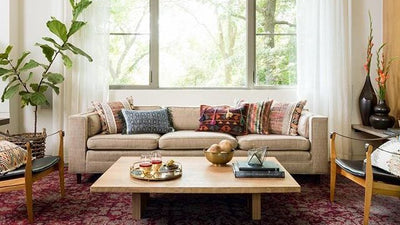
Decide whether the rug is the star or the supporting act. If the sofa and art are already bold, choose a rug in a neutral or a single quiet tone pulled from them. If the room is neutral, the rug is your chance to add color, and a vintage-style pattern with four or five hues gives the rest of the room a palette to borrow from.
Matching a rug to your sofa and wall color
Pick one color already in the room and repeat it in the rug; that single echo makes the choice look intentional. A gray sofa takes almost anything, but warm tones such as terracotta, rust and camel stop gray from feeling cold, while navy and indigo make it feel crisp. A beige or cream sofa pairs with blues, greens and charcoal for contrast, or with tone-on-tone ivory for a calm room. Leather sofas love vintage reds, blues and multicolor Persian patterns. For walls, use the color wheel: complementary pairings, such as sage green walls with a terracotta rug, or a navy wall with a warm ochre rug, look deliberate rather than matched.
Pattern scale, light and dark, and hiding wear
Big rooms and big furniture can take large-scale patterns; small rooms suit small motifs or a border design. Mixing scales is fine as long as they differ clearly: a large medallion rug with small-print pillows, not two mediums. A light rug makes a small room feel larger but shows every mark; a dark rug feels cozy but shows lint and pet hair. For a room with kids, pets or a front door, a mid-tone rug with an all-over pattern, or a "weathered" vintage look, hides wear better than anything solid. Look at samples in your own light, since a rug that reads warm in a showroom can turn gray under north-facing windows.
Best Rug Materials for a Living Room

| Material | Why choose it | Watch out for |
|---|---|---|
| Wool | Springs back from furniture, naturally stain- and flame-resistant, lasts decades, feels soft and warm. | Sheds for the first months; needs cool-water, wool-safe cleaning. |
| Performance synthetics (polypropylene, PET, nylon) | Stain-proof, affordable, ideal for kids and pets; many are machine washable. | Can flatten and pill in heavy traffic; less warmth underfoot. |
| Jute and sisal | Natural texture, great as a layering base, budget friendly. | Water leaves brown marks; scratchy; not for pet accidents. |
| Viscose, bamboo silk, real silk | Luminous sheen and a silky hand. | Crushes, water-stains and wears fast; keep them out of the main seating area. |
| Cotton flatweave | Thin, reversible, easy under doors and chairs, casual look. | Slides without a pad; shows dirt; shorter lifespan. |
For most living rooms the answer is wool for longevity or a performance fiber for a busy household, and a hand-knotted wool rug is the one that will still look right in thirty years. Silk and viscose belong in bedrooms and formal rooms; they are lovely, but they are not built for a coffee table and a dog.
Pile height and foot traffic
Low pile (under half an inch) and flatweaves suit high traffic, doors that swing over the rug, and rooms where chairs slide. Medium pile is the everyday choice for a living room: soft, but furniture legs do not sink. High pile and shag look plush but show every footprint and are awkward under a coffee table. If the front door opens onto the rug, measure the clearance under the door before buying anything thicker than half an inch.
Choosing a Rug Shape
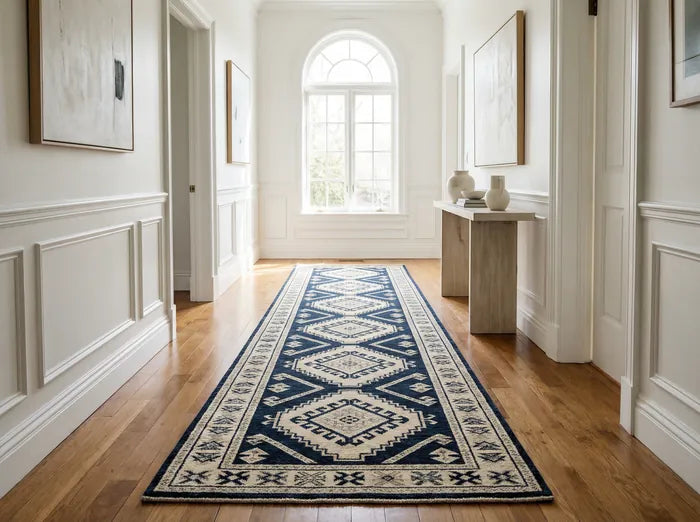
Rectangles fit most seating groups because sofas are rectangular. A round rug softens a square room, works under a round coffee table or in a reading corner, and is the right shape for a small, conversational furniture circle. A square rug suits a square room or a square sectional. Runners belong in the walkway behind the sofa, not under it. Organic or irregular shapes read modern and casual; they work best floating under a coffee table rather than under all the furniture.
Do You Need a Rug Pad?

Yes, every time. A pad stops the rug from creeping, prevents wrinkles that become trip hazards, cushions the foundation against the grinding of grit and furniture, and makes vacuuming more effective. On hardwood or tile use a felt-and-rubber pad; on carpet use a firm, textured pad made for rug-on-carpet. Cut it about an inch smaller than the rug on all four sides so the edges taper to the floor. Our rug pad guide covers thickness and floor types.
How to Care for a Living Room Rug
Living room rugs are vacuumed, not washed. Vacuum weekly with suction only, since a beater bar frays wool and natural fibers, and blot spills immediately with a white cloth. Rotate the rug 180 degrees every six months so the sun and the traffic path wear it evenly. Schedule a professional cleaning every two to three years for wool and hand-knotted rugs. The one exception is a washable synthetic, which can go in the machine when it needs it. Fiber-specific instructions are in our guides to cleaning wool, jute and Persian rugs.
A Five-Minute Living Room Rug Checklist
Before you order, confirm that the rug is wider than the sofa; that at least the front legs of every seat will sit on it; that 12 to 18 inches of floor will show at the walls; that the fiber suits your traffic, kids and pets; that the pile clears the door; that at least one color repeats something already in the room; and that you have a pad in the cart. If all seven are true, you have chosen well.
Frequently Asked Questions
What size rug is best for a living room?
Should a living room rug be lighter or darker than the sofa?
What is the best material for a living room rug?
Should the rug go under the sofa?
How much floor should show around a living room rug?
Can I use a round rug in a living room?
Do I need a rug pad for a living room rug?
About RugKnots
RugKnots is a family-owned rug company in Hagerstown, Maryland, importing and selling hand-knotted rugs since 1987. We hand-inspect every order, offer free U.S. shipping and a 30-day return guarantee. Questions? Reach out and a real person will reply within one business day.