


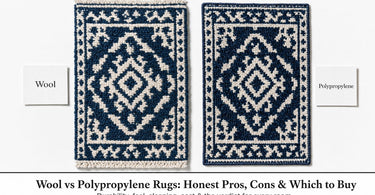
When you start shopping for an area rug, you'll quickly realize that the material is just as important as the design. The two most common materials on the market are wool and polypropylene. But which one is right for your home?
A wool area rug is a natural, premium product known for its longevity and luxury, while a polypropylene rug is a synthetic, budget-friendly option known for its stain resistance. In this guide, we'll break down the honest pros and cons of both so you can make the right investment for your space.
Table of Contents
What is a Wool Area Rug? (Pros & Cons)
Wool is the gold standard of rug materials. It has been used for centuries in hand-knotted Persian and Oriental rugs. It is a natural fiber sheared from sheep, making it eco-friendly, sustainable, and incredibly durable.
The Pros of Wool Rugs
- Unmatched Durability: Wool fibers are naturally crimped and elastic. They can be bent thousands of times without breaking, meaning a wool rug won't crush under heavy furniture and can last for generations.
- Naturally Stain & Water Resistant: Wool contains lanolin, a natural oil that repels water and prevents dirt from penetrating the fiber. Spills tend to bead up on the surface, giving you time to wipe them away.
- Luxurious Feel: Nothing beats the soft, plush, warm feeling of real wool underfoot.
- Fire Retardant: Wool naturally resists catching fire and will self-extinguish, making it safer around fireplaces.
The Cons of Wool Rugs
- Higher Cost: Because it is a natural, premium material (and often hand-knotted), wool rugs are significantly more expensive than synthetics.
- Shedding: New wool rugs will shed loose fibers for the first few months. This is normal and subsides with regular vacuuming.
- Absorbs Humidity: Wool absorbs moisture from the air, making it a bad choice for damp basements or bathrooms where mildew can form.
What is a Polypropylene Rug? (Pros & Cons)
Polypropylene (also known as olefin) is a synthetic fiber made from plastic. It is the most popular material for machine-made rugs because it is cheap to produce and can be dyed in vibrant, fade-resistant colors.
The Pros of Polypropylene Rugs
- Highly Affordable: You can often buy a large 8x10 polypropylene rug for a fraction of the cost of a wool rug.
- Stain Resistant & Easy to Clean: Polypropylene is essentially plastic, so it doesn't absorb liquids. Most stains can be cleaned easily, and many of these rugs can even be hosed off outside.
- Fade Resistant: The colors are incredibly colorfast, making them great for sunny rooms or outdoor use.
- Zero Shedding: Unlike wool, synthetic fibers do not shed.
The Cons of Polypropylene Rugs
- Shorter Lifespan: The fibers are not elastic. Once they are crushed by foot traffic or heavy furniture, they stay crushed. A typical poly rug lasts 3 to 5 years before looking matted and worn.
- Holds Oil-Based Stains: While it repels water, polypropylene absorbs oils. An oil-based spill (or even natural oils from bare feet or pets) can leave a permanent dark spot.
- Not Eco-Friendly: It is a petroleum-based plastic product that is highly flammable and will eventually end up in a landfill.
Side-by-Side Comparison
| Feature | Wool Area Rugs | Polypropylene Rugs |
|---|---|---|
| Lifespan | 50+ years (if hand-knotted) | 3 to 5 years |
| Cost | High (Investment) | Low (Budget-friendly) |
| Stain Resistance | Good (repels water naturally) | Excellent (except for oils) |
| Crush Resistance | Excellent (bounces back) | Poor (mats down permanently) |
| Feel | Soft, warm, luxurious | Can feel slightly stiff or plastic-like |
| Eco-Friendly | Yes (natural, biodegradable) | No (petroleum-based plastic) |
Which Material is Best for Each Room?
The choice between wool and polypropylene usually comes down to where the rug is going to live.
- Living Room: Wool. This is usually the centerpiece of your home. A wool rug provides the comfort and durability needed for a high-traffic lounging area.
- Dining Room: Polypropylene (or flatweave wool). Dining chairs are constantly sliding back and forth, and food spills are inevitable. A cheap, easy-to-clean poly rug is often the safer choice here.
- Bedroom: Wool. You want the softest, warmest material possible when you step out of bed in the morning.
- Outdoor / Patio: Polypropylene. Wool will mold and rot outside. Polypropylene is weather-resistant and fade-resistant.
"I always tell my clients: buy polypropylene for your patio, your dining room, or a kid's playroom where you know it will get ruined in 3 years. But for your living room or bedroom, invest in wool. A good wool rug will outlast 10 synthetic rugs, saving you money in the long run."
— Naheed Mir, Founder of RugKnots (Sourcing Rugs Since 1987)
Frequently Asked Questions
Is polypropylene rug toxic?
Polypropylene itself is generally considered safe and is used in many household plastics (like food containers). However, synthetic rugs are often treated with chemical flame retardants or stain protectors that can off-gas VOCs. If you are highly sensitive to chemicals, natural wool is a safer choice.
Can you wash a wool rug?
You should never put a wool rug in a washing machine or soak it completely, as it can shrink and lose its shape. Wool rugs should be spot-cleaned with mild soap and water, and professionally cleaned every 1-3 years.
Are polypropylene rugs soft?
Modern manufacturing techniques have made polypropylene much softer than it used to be. While it will never have the natural warmth and luxury of wool, high-quality synthetic rugs can feel quite soft to the touch.
About RugKnots
RugKnots is a family-owned rug company based in Hagerstown, Maryland. Founded in 2010, we've spent over 14 years helping homeowners and designers find the right rug — from hand-knotted Persian heirlooms to durable machine-made everyday pieces. We hand-inspect every order before it ships, offer free U.S. shipping, and back every purchase with our 30-day return guarantee.
This article was written by our editorial team and reviewed for accuracy. Our writers work directly with our buyers and customer-experience team, who handle thousands of rug questions every year. If you have a question this article didn't answer, reach out — a real human will get back to you within one business day.




)