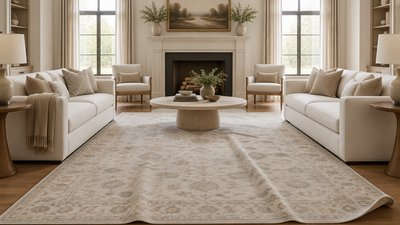
Quick answer: to clean a Persian rug, vacuum both sides with suction only, test a hidden corner for colorfastness with a damp white cloth, blot spills with cool water and pH-neutral wool-safe soap, and dry flat in the shade. A colorfast wool rug can be hand-washed at home with 1 teaspoon of mild detergent and 1 teaspoon of white vinegar per bucket of cool water. Silk, antique and non-colorfast rugs go to a rug specialist every 2 to 3 years, at about $4 to $8 per square foot.

A Persian rug is wool (sometimes silk) knotted by hand onto a cotton foundation, so the rules are the ones for wool: cool water, pH-neutral soap, no scrubbing, no soaking. Persian rugs are the Iranian branch of the Oriental family, and this method matches our broader guide on how to clean Oriental rugs. Silk pile, wool-silk blends and antiques should never be wet-cleaned at home.
How to Test a Persian Rug for Colorfastness
Dampen a white cloth with cool water only, press it onto a back corner for 30 seconds and check for dye. Repeat on each major color. Poorly fixed dyes, not natural dyes as such, are the usual bleeders, so test every rug. If color transfers, blot spills with plain water only and leave washing to a professional who can set the dyes first.
How to Vacuum a Persian Rug

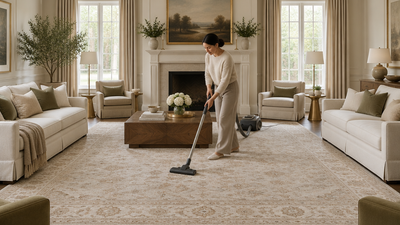
Grit at the base of the pile cuts wool with every footstep, so weekly vacuuming matters most. Use low suction with no beater bar, go with the pile, skip the fringe, and vacuum the back once a season. Rotate every six months, keep it out of direct sun, and use a felt rug pad so the vacuum lifts more grit.
How to Spot Clean a Persian Rug
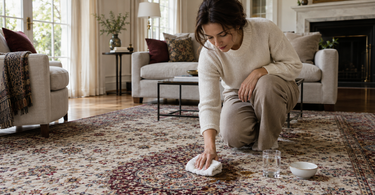
Scrape solids with a spoon and blot immediately with a white cloth, outside in. Blot with cool water, then with a few drops of wool-safe detergent in a cup of cool water (dampen the cloth, never pour on the rug), rinse by blotting, finish with a 1:4 white-vinegar blot and dry with a fan.
| Stain | Method |
|---|---|
| Red wine, coffee, tea | Blot; cool water; 1/2 tsp clear pH-neutral soap + 1 tbsp white vinegar in 1 cup cool water; rinse; blot dry. |
| Pet urine | Blot, flush with cool water, blot with 1:4 vinegar, dry with a fan. Only wool-safe enzyme cleaners, tested first. If it reached the foundation, it needs a full wash; see our pet stain guide. |
| Grease / oil | Cornstarch for 30 minutes, vacuum, blot with diluted wool soap. Skip baking soda, which can yellow wool. |
How to Wash a Wool Persian Rug by Hand (Step by Step)
For colorfast wool rugs that are not antique or silk, on a mild, dry day in the shade.
What you'll need

Broom handle, suction-only vacuum, bucket, pH-neutral wool-safe detergent (WoolSafe-approved, Eucalan or castile soap), white vinegar, soft sponge, rubber squeegee, towels, fan.
Shake out and dust the rug first
Hang it over a rail, beat the back until no dust puffs out, then vacuum both sides.
Test for colorfastness
The damp-white-cloth test above, on every main color.
Mix the solution
1 teaspoon of mild detergent and 1 teaspoon of white vinegar in a bucket of cool water.
Sponge, don't soak
Dampen the rug lightly, then sponge the solution in with the pile, a section at a time. A flooded rug shrinks, bleeds and mildews.
Rinse and squeegee
Rinse until the runoff is clear, then squeegee out the water with the pile. Never wring or fold.
Dry flat in the shade and flip
Lay it flat or over two rails with a fan running, flip once the front is dry, and bring it in only when the foundation is dry.
How to Clean Persian Rug Fringe
The fringe is the rug's cotton warp, so treat it gently: slide a towel under it, comb it straight with a soft brush, dab with the same solution, rinse by blotting and comb again. A 1:4 vinegar blot brightens yellowed cotton; bleach rots it.
How Long Does a Persian Rug Take to Dry?

A spot dries in 6 to 12 hours; a washed rug takes 24 to 72 hours depending on size and humidity. Press the back with a paper towel: if it comes away damp, keep drying, or the foundation can mildew.
Can You Steam Clean or Shampoo a Persian Rug?
No to both, and no to power washing or in-home truck-mount cleaning. Heat shrinks and felts wool and loosens dyes; carpet shampoos are alkaline and strip lanolin; flooding the rug in place leaves the foundation wet for days.
How Much Does It Cost to Clean a Persian Rug?

Professional cleaning runs about $4 to $8 per square foot in 2026: roughly $150 to $240 for a 5x8, $320 to $640 for an 8x10 and $430 to $860 for a 9x12, more for silk, urine or odor treatment, moth damage and antiques. Choose a rug specialist who dusts and immersion-washes off-site, not a carpet-cleaning company. See our rug cleaning cost guide and washing vs dry cleaning.
How Often Should You Clean a Persian Rug?
Vacuum weekly, spot clean at once, rotate every six months and book a professional wash every 2 to 3 years, or yearly for entryways, dining rooms and homes with pets. It is due when your palm comes up gray after a rub across the pile.
What Never to Do, and How to Store It
Never use hot water, steam, bleach, ammonia, carpet shampoo, a beater bar or a washing machine, and never dry in direct sun. To store, wash first, roll pile-in, wrap in acid-free paper (never plastic) and check every six months for moths. Silk rugs need their own care: see our silk rug cleaning guide.
Frequently Asked Questions
Can you wash a Persian rug at home?
How much does it cost to clean a Persian rug?
Can you steam clean a Persian rug?
How often should a Persian rug be cleaned?
How long does a Persian rug take to dry?
Can you put a Persian rug in the washing machine?
About RugKnots
RugKnots is a family-owned rug company in Hagerstown, Maryland, importing and selling hand-knotted rugs since 1987. We hand-inspect every order, offer free U.S. shipping and a 30-day return guarantee. Questions? Reach out and a real person will reply within one business day.