Wool rugs are one of the most durable and beautiful flooring investments you can make — but they are also one of the most misunderstood when it comes to cleaning. The wrong approach (too much water, the wrong detergent, or rubbing instead of blotting) can cause wool to shrink, bleed, or felt permanently. Done correctly, a wool rug can be cleaned at home and will last for decades.
This guide covers everything: routine vacuuming, spot cleaning, deep cleaning at home, how to handle shedding, specific stain types, and when professional cleaning is the right choice. For general rug care tips, see our main Rug Care & Cleaning Guide →
In This Guide
What You Need to Know About Wool Before Cleaning
Wool is a natural protein fiber. It is naturally moisture-resistant and dirt-repellent to a degree — lanolin, the natural oil in wool, creates a mild barrier that slows staining. This is why wool rugs often look cleaner than synthetic rugs even after extended use.
However, wool is sensitive to three things that will permanently damage it:
- Alkaline detergents — strip the lanolin and damage the protein structure of the fibers
- High heat — causes shrinkage and felting (the fibers lock together permanently)
- Excess water and agitation — causes the fibers to felt and the backing to shrink or develop mold
Routine Vacuuming
Regular vacuuming is the single most important maintenance task for a wool rug. Grit and sand embedded in the pile act like sandpaper on the wool fibers, cutting them from below with every footstep. Removing this grit regularly prevents premature wear.
- Vacuum once or twice a week in high-traffic areas, once a week in normal use.
- Always vacuum on low suction with a suction-only attachment — no beater bar, as it can fray and pull wool fibers from the foundation.
- Vacuum in the direction of the pile. Run your hand over the rug to feel which way the pile lies — it should feel smooth in one direction and slightly resistant in the other.
- Flip the rug occasionally and vacuum the back to dislodge embedded grit that has worked its way through from above.
- Rotate the rug 180° every 6–12 months to ensure even wear and even fading from light exposure.
Spot Cleaning a Wool Rug
Act fast — fresh spills are far easier to remove from wool than dried stains. Here is the correct process:
Blot Immediately
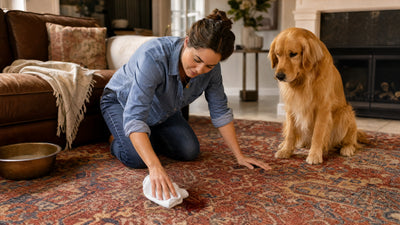
Blot the spill immediately with a clean white cloth, pressing firmly. Work from the outer edges inward to prevent spreading. Never rub — rubbing pushes the liquid deeper and can cause the wool fibers to felt.
Remove Solids
For solid or semi-solid spills, scrape up as much as possible with a spoon or dull knife before applying any liquid. Work from the outside edges inward.
Apply Cleaning Solution
Mix a small amount of wool-safe detergent (pH-neutral, no bleach, no optical brighteners, no enzyme cleaners) with cool water. Apply a small amount to a clean cloth — never pour liquid directly onto the rug. Blot the stained area gently from the outside in.
Rinse
Rinse by blotting with a clean cloth dampened with cool water only. Remove all soap residue — soap left in wool fibers attracts dirt and causes stiffness.
Dry Thoroughly
Blot dry with a dry towel, then allow to air dry completely before use. Direct a fan at the area to speed drying. Never use hot air or place in direct sunlight while damp.
Deep Cleaning a Wool Rug at Home
A thorough deep clean once or twice a year keeps a wool rug fresh and extends its life. Here is how to do it safely at home:
- Choose a dry, mild day. Take the rug outside and lay it on a clean surface.
- Vacuum both sides thoroughly to remove loose debris before introducing any moisture.
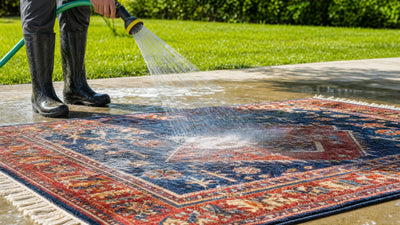
- Mix a wool-safe detergent in a bucket of cool water. Using a soft-bristle brush or sponge, gently work the solution into the pile — do not scrub. Work in the direction of the pile.
- Rinse thoroughly with cool water from a garden hose on a gentle setting. Work in the direction of the pile.
- Press out excess water with a squeegee or by rolling the rug in dry towels. Never wring a wool rug — wringing distorts the fibers and foundation.
- Hang flat or over two parallel rails to dry in the shade. Direct sun can fade wool dyes. Flip halfway through drying.
- Make sure the rug is completely dry before bringing it inside — a damp wool rug placed on flooring can cause mold and water damage to the floor.
Dealing with Shedding
New wool rugs shed — this is completely normal and not a sign of poor quality. Loose fibers from the manufacturing process work their way out during the first few months of use. Here is what to expect and how to manage it:
- Shedding is heaviest in the first 1–3 months and decreases significantly after 3–6 months.
- Vacuum regularly to remove loose fibers. This actually speeds up the shedding process and gets you to the stable state faster.
- Never pull at loose fibers — this can pull attached fibers out too. Instead, clip any sprouts or loops with scissors at the pile level.
- Hand-knotted wool rugs typically shed more than machine-made wool rugs due to the hand-spinning process used for the yarn.
Specific Stain Types on Wool Rugs
| Stain | Method | Notes |
|---|---|---|
| Red wine | Blot immediately. Apply cool water and blot. Mix 1 tsp dish soap + 1 tbsp white vinegar + 1 cup cool water. Apply with cloth, blot. Rinse and dry. | Act within minutes for best results |
| Coffee / tea | Blot immediately. Apply cool water and blot. Use diluted wool-safe detergent. Rinse and dry. | Avoid hot water |
| Pet urine | Blot immediately. Apply cool water and wool-safe detergent. Blot dry thoroughly. Do not use enzyme cleaners on wool. | For persistent odor, professional cleaning recommended |
| Grease / oil | Apply dry cornstarch or baking soda. Leave 30 minutes. Vacuum. Treat residue with diluted dish soap on a cloth. Blot dry. | Do not rub — spreads the grease |
| Mud | Let dry completely. Vacuum up dried mud. Treat residue with diluted wool-safe detergent. Blot dry. | Never clean wet mud — it spreads |
| Ink | Blot immediately. Apply rubbing alcohol to a cloth and blot gently. Rinse with cool water. Professional cleaning for large ink stains. | Test on a hidden area first |
What Never to Use on a Wool Rug
| Product / Method | Why to Avoid |
|---|---|
| Hot water | Causes shrinkage and felting |
| Bleach | Destroys wool protein fibers and causes permanent color loss |
| Alkaline detergents | Strip lanolin and damage the fiber structure |
| Enzyme cleaners | Break down protein fibers — wool IS a protein fiber |
| Steam cleaners | Heat causes felting; moisture causes shrinkage |
| Rubbing or scrubbing | Causes felting and spreads stains |
| Tumble drying (unless label permits) | Heat and agitation cause irreversible shrinkage |
| Optical brighteners | Can cause uneven color changes in wool dyes |
How Often to Clean a Wool Rug
| Task | Frequency |
|---|---|
| Vacuuming | 1–2 times per week in high-traffic areas; weekly in normal use |
| Spot cleaning | Immediately when spills happen |
| Shake out outdoors | Monthly for smaller rugs |
| Deep clean at home | Once or twice a year |
| Professional cleaning | Every 2–3 years for hand-knotted rugs; every 1–2 years for high-traffic areas |
| Rotate rug | Every 6–12 months |
When to Call a Professional
Professional cleaning is the right choice for:
- Hand-knotted, antique, or Persian wool rugs for any deep clean
- Deep stains that did not respond to spot cleaning
- Pet accidents that have soaked into the backing
- Persistent odor after home cleaning
- Any rug where you are unsure about the dye colorfastness
- Rugs that need restoration after water damage
Always choose a professional cleaner who specializes in wool and natural fibers — not a standard carpet cleaning company. Ask specifically about their process for wool rugs and whether they use pH-neutral solutions.
Frequently Asked Questions
- If your wool rug is also a Persian or hand-knotted design, see our Persian Rug Care Guide → for additional guidance.
- For pet stain removal on wool rugs, see our Pet Stain Removal Guide →
- For general rug care tips, visit our Rug Care & Cleaning Hub →
- Considering a new rug? Read our Complete Rug Buying Guide →
About RugKnots
RugKnots is a family-owned rug company based in Hagerstown, Maryland. Founded in 2010, we've spent over 14 years helping homeowners and designers find the right rug — from hand-knotted Persian heirlooms to durable machine-made everyday pieces. We hand-inspect every order before it ships, offer free U.S. shipping, and back every purchase with our 30-day return guarantee.
This article was written by our editorial team and reviewed for accuracy. Our writers work directly with our buyers and customer-experience team, who handle thousands of rug questions every year. If you have a question this article didn't answer, reach out — a real human will get back to you within one business day.