Why Buying Vintage Rugs Takes More Research Than Buying New
A new rug comes with a spec sheet — pile height, fiber content, construction method. A vintage rug comes with a history. That history is what makes it valuable, but it's also what makes it easy to overpay or undervalue a piece if you don't know what you're looking at. This guide covers the key things to check before you buy.
Check the Construction First
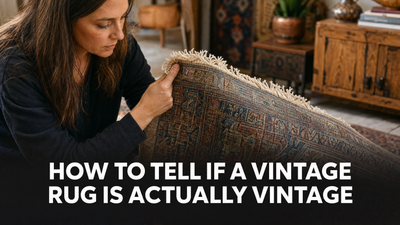
The single biggest quality indicator in a vintage rug is whether it's hand-knotted or machine-made. Flip the rug over and look at the back. Hand-knotted rugs show slight irregularities in the knot pattern — no two rows are perfectly identical. Machine-made rugs have a perfectly uniform grid on the back, often with a fabric or latex backing applied over the pile.
Hand-knotted construction is significantly more durable and more valuable. A good hand-knotted rug from the mid-20th century will outlast any machine-made rug made today.
Assess the Pile Evenly
Run your hand across the rug in multiple directions. Even wear is acceptable and expected in a vintage piece — it's part of the character. Uneven wear, bald spots in high-traffic areas, or fraying at the edges are signs of neglect rather than age. These issues aren't necessarily deal-breakers, but they should be reflected in the price.
Smell Test
This sounds unusual, but it matters. A musty, mildewy smell often indicates the rug has been stored in a damp environment, which can compromise the fibers and make the smell very difficult to eliminate. A slight "wool" smell is normal. Strong chemical smells may indicate a recent cleaning or deodorizing treatment applied to mask an underlying issue.
Look at the Colors in Natural Light
Vintage rugs photographed indoors under artificial light often look very different in daylight. Colors that appear warm and rich under yellow bulbs may be muted or muddy in natural light. If you're buying in person, take the rug to a window or outside. If you're buying online, ask the seller for photos in natural light.
Verify the Origin If It Matters to You
Persian, Turkish, Afghan, and Moroccan vintage rugs each have distinct knotting traditions, dye techniques, and pattern vocabularies. If the origin matters for your purposes (investment, collection, specific aesthetic), ask the seller for documentation or look for the construction and pattern characteristics associated with that region. Mislabeling is common in the vintage market, especially with online listings.
Price Benchmarking
Compare the asking price against similar pieces on established platforms. A 9x12 hand-knotted Persian from the 1970s in good condition typically sells in the $800–$2,500 range depending on intricacy and condition. Significant deviations from the market price in either direction — suspiciously cheap or extremely expensive without clear justification — warrant extra scrutiny.
About RugKnots
RugKnots is a family-owned rug company based in Hagerstown, Maryland. Founded in 2010, we've spent over 14 years helping homeowners and designers find the right rug — from hand-knotted Persian heirlooms to durable machine-made everyday pieces. We hand-inspect every order before it ships, offer free U.S. shipping, and back every purchase with our 30-day return guarantee.
This article was written by our editorial team and reviewed for accuracy. Our writers work directly with our buyers and customer-experience team, who handle thousands of rug questions every year. If you have a question this article didn't answer, reach out — a real human will get back to you within one business day.