Quick answer: Yes, wool rugs are soft. Wool fibers are naturally crimped, which makes the pile springy and cushioned underfoot, and a trace of natural lanolin keeps them supple. How soft a particular rug feels depends on the wool grade, the pile height and density, and the weave: a thick hand-knotted or shag wool rug feels plush, while a flatweave feels smooth but firmer. Most wool rugs also get a little softer after a few weeks of use.
Want to feel it for yourself? Browse our wool rugs, with free U.S. shipping and 30-day returns.

What Makes Wool Rugs Soft?
Run your hand across a good wool rug and it pushes back gently, like a firm pillow. That feel comes from the fiber itself, not from a coating, which is why it lasts for decades instead of wearing off.
Fiber Crimp and Resilience
Each wool fiber grows with a natural wave, called crimp. Thousands of these tiny springs packed together give the pile its bounce, and they help a wool rug recover after furniture or footsteps press it down. Wool fiber can be bent back on itself thousands of times without breaking, which is why a wool rug still feels cushioned after years of traffic.
Lanolin
Sheep produce lanolin, a natural wax, to protect their fleece. Most of it is washed out before spinning, but a little remains, especially in hand-spun wools from high-altitude sheep. That residue gives the yarn a soft hand and a subtle sheen, and it helps the fibers shrug off dirt.
Wool Quality and Sheep Breed
Rug wool is deliberately coarser than sweater wool. Fine merino, at roughly 15 to 24 microns, is lovely against skin but would crush and pill on a floor. Rug wools are thicker and longer, which gives them strength and spring. Within that range, quality still varies a lot. New Zealand wool is prized for its long, white, lustrous fibers, which take dye evenly and feel smooth. Highland wools from Tibet, Afghanistan and parts of Iran are known for high lanolin content and a silky feel. Short, over-processed or recycled wool feels drier and coarser.

Pile Height and Knot Density
The more fiber under your foot, the softer the rug. A pile of about 1/2 inch or more feels plush; a low pile of 1/4 inch feels smooth and firm. Density matters too: a hand-knotted rug with more knots per square inch packs the yarn tightly, so it feels dense and velvety rather than loose. A thick shag is the softest wool rug of all, while a flatweave has no pile and feels like a heavy blanket.
Do Wool Rugs Get Softer Over Time?
Usually, yes. A brand-new wool rug can feel a little stiff or coarse, because the yarn is still tight from spinning and the surface is covered with loose fibers left over from shearing the pile. Over the first few weeks to months, foot traffic and regular vacuuming relax the yarn and remove those loose fibers, and the rug settles into a softer, fuller feel.
That early fluff is shedding, and it is normal, especially on hand-tufted rugs. It slows down as the loose fibers are removed. Our guide to wool rug shedding explains how long it lasts and how to speed it up.
Wool Rug Softness vs. Other Materials
| Material | How it feels | How the feel lasts |
|---|---|---|
| Wool | Springy, warm, cushioned | Excellent; recovers from crushing |
| Cotton | Soft and smooth, but flat | Fair; crushes and pills |
| Polypropylene | Soft when new; can feel waxy or plastic | Fair; mats down in traffic lanes |
| Polyester | Very soft, silky | Fair; flattens and does not bounce back |
| Viscose | Silky, shiny | Poor; mats and water-spots easily |
| Silk | The softest and finest | Good with care; delicate and costly |
| Jute / sisal | Coarse; sisal is the roughest | Not a barefoot rug |
Wool vs. Cotton
Cotton is soft to the touch but has no spring, so a cotton rug feels thin and flattens quickly. Wool feels thicker and warmer underfoot for the same pile height.
Wool vs. Polypropylene and Polyester
Synthetic rugs can feel very soft in the store, sometimes softer than wool. The difference shows up after a year: synthetics crush in walkways and stay crushed, while wool springs back. Our polypropylene vs. wool comparison and the wool vs. synthetic guide cover cost and care too.
Wool vs. Jute and Viscose Blends
Wool-and-jute rugs mix the warmth of wool with the texture of jute; they feel softer than pure jute but firmer than pure wool. Wool-and-viscose or wool-and-silk blends add a silky sheen to the pattern, though viscose is weaker. See wool blend rugs and wool vs. silk rugs.

Types of Wool Rugs and How Soft Each Feels

- Hand-knotted: each knot is tied by hand, giving a dense cut pile that feels velvety and lasts for generations. Softness depends on the wool and the knot count. Shop hand-knotted rugs.
- Hand-tufted: yarn is punched through a backing and sheared, often in a thicker pile. It feels plush right away but sheds more at first and does not last as long as hand-knotted.
- Flatweave (kilim and dhurrie): no pile at all, so it feels smooth and firm. It is reversible, lightweight and great under dining tables. Shop flatweave rugs.
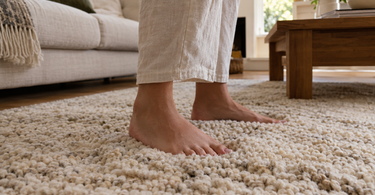
- Shag: long pile, 1 to 3 inches, for the softest, coziest feel. It suits bedrooms rather than busy walkways. Shop shag rugs.
- Loop pile and braided: uncut loops or braided cords feel nubby and firm and hide footprints well.
Are Wool Rugs Good? Pros and Cons
Softness is only part of the story. Here is how wool performs overall; our full wool rug pros and cons post goes further.
Pros
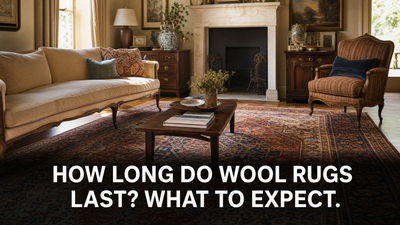
- Durable: the same resilience that makes wool soft lets it handle living rooms, hallways and other high-traffic spots. A well-made wool rug often lasts 20 years or more (see how long wool rugs last).
- Stain resistant: lanolin and the scaly surface of the fiber help spills bead up long enough to be blotted.
- Flame resistant: wool is hard to ignite and tends to self-extinguish, unlike many synthetics that melt.
- Warm and quiet: wool insulates a cold floor and absorbs sound.
- Natural: wool is renewable and biodegradable.
Cons
- Higher upfront cost than synthetic rugs, though it usually costs less per year of use.
- Shedding in the first months, especially on tufted rugs.
- Moisture sensitive: soaking can cause shrinking, browning or mildew, so wool is a poor choice for bathrooms and outdoors.
- Not machine-washable, and it needs moth checks in storage.
So wool is a great choice for living rooms, bedrooms and even busy hallways. Choose a synthetic or washable rug for wet areas, outdoors, or a home where spills happen daily.
How to Keep a Wool Rug Soft
- Vacuum weekly with suction only, or with the beater bar switched off or raised, moving with the pile.
- Blot spills right away with cool water; never rub, and skip harsh detergents and hot water, which strip lanolin and make the fiber feel brittle.
- Rotate the rug every 6 to 12 months so wear and sun exposure stay even.
- Use a felt or felt-and-rubber pad. It adds cushion, so the rug feels softer, and it reduces crushing. See our rug pad guide.
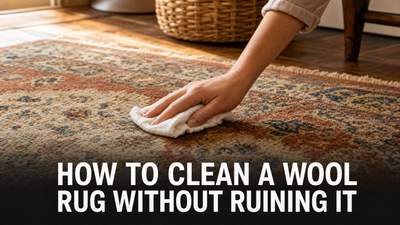
- Book a professional wash every 1 to 2 years (every 12 to 18 months in a busy home). Our guide to cleaning a wool rug covers the at-home steps.

Where to Buy Soft Wool Rugs
When you shop, look at the pile height and the construction, not just the photo. For the softest feel, choose a hand-knotted rug with a medium pile or a wool shag; for a durable, smooth feel under a dining table, choose a flatweave. Our wool rug collection includes New Zealand wool and hand-knotted styles in every size, and our wool area rug buying guide helps you compare them.
Wool Rug Softness FAQs
Are wool rugs soft to touch or itchy?
Do wool rugs get softer over time?
Why does my new wool rug feel rough?
Which is softer, wool or polypropylene?
Are wool rugs comfortable for bare feet and kids?
Are wool rugs good for high-traffic areas?
About RugKnots
RugKnots is a family-owned rug company in Hagerstown, Maryland, importing and selling hand-knotted rugs since 1987. We hand-inspect every order, offer free U.S. shipping and a 30-day return guarantee. Questions? Reach out and a real person will reply within one business day.