


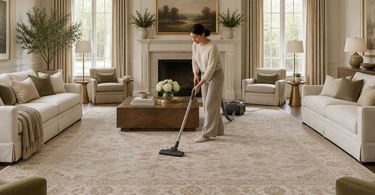
Quick answer: You can deep clean a large area rug at home without taking it outside: vacuum both sides, deodorize with baking soda, spot clean stains, then go over the rug with a carpet shampooer on a low-moisture setting and dry it fast with fans. The whole job takes an afternoon plus drying time — and the drying is the part you cannot rush.
An 8x10 or 9x12 rug is too heavy to drag to a driveway, too big for any machine, and too expensive to ruin with guesswork. The good news: the in-place method below cleans a large rug thoroughly on the floor where it lies. RugKnots has been sourcing rugs since 1987, and this is the process we recommend to customers between professional cleanings.
Cleaning Levels at a Glance
| Cleaning Level | How Often | Tools | Time |
|---|---|---|---|
| Vacuum (both sides) | Weekly | Vacuum, suction-only for wool | 15–30 min |
| Deodorize | Monthly | Baking soda, soft brush | 30 min + dwell |
| Spot clean | As spills happen | Mild detergent, white cloths | 10–20 min |
| Deep clean in place | 1–2x per year | Carpet shampooer, fans | Afternoon + drying |
| Professional wash | Every few years | Immersion facility | 1–2 weeks turnaround |
What You'll Need
A vacuum with strong suction, baking soda, a soft-bristle brush, white cotton cloths, a spray bottle with mild detergent solution (a teaspoon of clear dish soap in two cups of cool water), a carpet shampooer or steam cleaner rental, two box fans, and a dry towel supply. Optional but useful: a wet/dry shop vacuum to pull moisture back out of the pile.

Step 1: Vacuum Like You Mean It
Vacuum the rug top slowly in overlapping passes, then fold half of the rug back and vacuum the underside and the floor beneath. Grit that works into the foundation acts like sandpaper every time someone walks across the rug, so this step does more for rug lifespan than any shampoo. On wool and other delicate piles, switch off the beater bar and use suction only — spinning brushes fuzz the pile and accelerate shedding.
Step 2: Deodorize With Baking Soda
Sprinkle baking soda evenly across the pile, work it in lightly with a soft brush, and leave it for at least 30 minutes — overnight for pet odors. Then vacuum it all back out. Baking soda neutralizes odor trapped in the fibers rather than masking it, and it is safe on wool and synthetics alike.

Step 3: Spot Clean Stains First
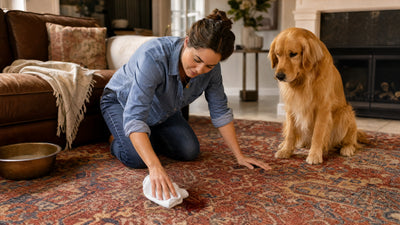
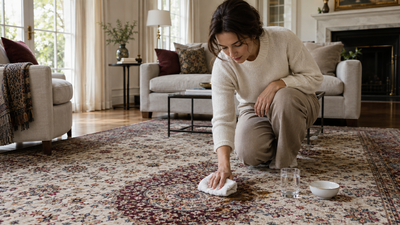
Treat visible stains before any overall wet cleaning, otherwise hot water can set them permanently. Blot — never rub — with a white cloth and your mild detergent solution, working from the stain's outside edge toward the center. Rinse the area by blotting with plain water, then press dry with towels. Test the solution on a hidden corner first: some dyed rugs, especially vintage and hand-knotted pieces, can bleed.

Step 4: Deep Clean Section by Section
Here is how to clean a large rug without taking it outside: divide it mentally into quarters and clean one quarter at a time. Move furniture off the working section (sliders help), run the carpet shampooer in slow, overlapping passes, and make a second pass with suction only to extract as much water as the machine will pull. Then move to the next quarter. Working in sections keeps any one area from staying saturated and lets you put the room back together progressively.

Keep the machine on its lowest water setting. The goal is damp, never soaked — overwetting is the number one way home cleaning goes wrong on a large rug.

A Caution for Wool and Natural Fibers
Wool can be wet cleaned, but gently: cool water only, wool-safe or pH-neutral detergent, minimal moisture, and no oxygen bleach. Hot water and harsh alkaline cleaners can shrink wool and strip its lanolin. Expect some fiber fluff in the machine's recovery tank — that is normal shedding, explained in our guide to why wool rugs shed. Jute, sisal, and viscose are different animals entirely: they brown or stain with water and should not be shampooed at home. Machine-washable bathroom and accent rugs have their own process, covered in how to wash bathroom rugs.
Step 5: Dry It Fast and Protect the Floor
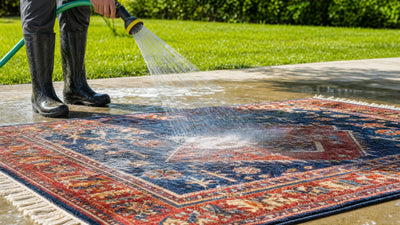
Drying is where hardwood floors get damaged and mildew gets started. Aim air across the rug with two fans, open windows if the weather is dry, and run a dehumidifier if you have one. Lift the rug's edge after a few hours: if the floor beneath feels damp, fold the rug back and dry the floor and backing directly. A large rug should be fully dry within 6 to 24 hours; if it still smells damp on day two, mildew is forming and the rug needs more airflow immediately.

On hardwood, slide a tarp or plastic sheeting under the rug before any wet cleaning if you can, and never leave a damp rug lying on wood overnight.
Keep It Clean Longer
Vacuum weekly, rotate the rug 180 degrees twice a year so traffic wears evenly, and groom the pile occasionally with a soft brush. A quality rug pad underneath adds airflow that helps the rug shed moisture and dust.

When to Call a Professional Instead
Some jobs should not be DIY: pet urine that has soaked into the backing, antique or silk rugs, serious dye bleed, and any wool rug you are not confident testing. Professional immersion washing removes soil a home machine cannot reach. Expect roughly $2 to $8 per square foot depending on material and condition — our full breakdown of professional rug cleaning costs has 2026 pricing by size. As a rule of thumb, deep clean at home once or twice a year and book a professional wash every few years for wool and handmade pieces.
Common Mistakes to Avoid
Overwetting the rug. A soaked foundation takes days to dry, invites mildew, and can delaminate tufted rugs. Low moisture, multiple extraction passes.
Using hot water on wool. Heat plus agitation is how wool shrinks and felts. Cool water and gentle detergent only.
Scrubbing stains. Rubbing spreads the stain outward and frays the pile. Always blot.
Skipping the color-test. One hidden-corner test prevents a bleeding disaster on red and indigo dyes.
Leaving a damp rug on hardwood. Trapped moisture clouds floor finishes and can cup the boards. Dry the rug and the floor beneath it.
Frequently Asked Questions
How to clean large area rugs at home?
Vacuum both sides, deodorize with baking soda, spot clean stains with a mild detergent solution, then deep clean section by section with a carpet shampooer on a low-moisture setting. Finish by drying the rug within 24 hours using fans and open windows.
How to clean a large rug without taking it outside?
Clean it in place: divide the rug into quarters, move furniture off each section, shampoo with minimal water, and extract thoroughly before moving on. Fans speed drying. This section-by-section method cleans a 9x12 rug entirely indoors in an afternoon.
How to clean a 9x12 rug?
A 9x12 rug is cleaned the same way as any large rug: vacuum, baking soda, spot treat, then low-moisture shampoo in sections. Check the fiber first — wool needs cool water and gentle detergent, while jute, sisal, and viscose should not be wet cleaned at home.
How to deep clean a large rug?
Deep cleaning means washing the pile, not just the surface: after vacuuming and spot treatment, run a carpet shampooer slowly over every section, make extraction-only passes to pull water back out, and dry completely with fans. For embedded pet odor or antique rugs, professional immersion washing is the deeper option.
A Clean Rug Is a Keeper
With a vacuum, baking soda, and a rented shampooer, a large rug can look and smell new again without leaving the room. And if your current rug is past saving, we can help with that too: browse our large area rugs, 9x12 rugs, and easy-care pet-friendly rugs — free shipping in the contiguous US and free 30-day returns on every order. For long-lived natural fiber, our wool area rugs clean up beautifully with exactly the method above.

)