


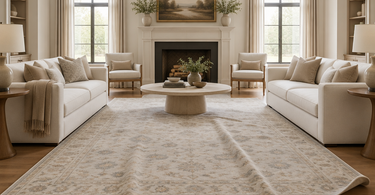
Quick answer: To get wrinkles out of an area rug, unroll it and let it rest for 24 to 48 hours, then use reverse rolling for stubborn creases: roll the rug tightly against the direction of the curl, leave it for a few hours, and unroll. For deep-set wrinkles, weigh them down with heavy furniture or books, or steam the crease through a damp towel. Most new rug wrinkles disappear within a week.
Almost every rug arrives with wrinkles. Rugs ship folded or rolled, and the backing develops a "memory" of that position during transit; this is normal, not a defect. The good news is that every common wrinkle, crease, curling corner, and bump has a reliable fix, and most cost nothing. Here are the six methods that work, ranked by how often they solve the problem.
Why New Rugs Have Wrinkles in the First Place
A rug's backing, whether woven cotton, latex, or synthetic, is flexible but holds its shape. When a rug spends one or two weeks rolled or folded in a box, the backing sets into that shape the same way a rolled poster wants to stay rolled. Warmth, time, and gentle counter-pressure release that memory. Humidity plays a role too: in very dry rooms, backings stay stiff longer, so wrinkles can take a few extra days to relax in winter.

6 Methods to Flatten an Area Rug, Ranked
| Method | Best For | Time Needed | Effort |
|---|---|---|---|
| 1. Time + foot traffic | Light shipping creases | 3–7 days | None |
| 2. Reverse rolling | Curling ends and corners | 2–12 hours | Low |
| 3. Weight method | Stubborn creases, corners | 24–48 hours | Low |
| 4. Steam through a towel | Deep-set folds | 15–30 minutes | Medium |
| 5. Sunlight warmth | Whole-rug stiffness | 2–4 hours | Low |
| 6. Rug pad + grippers | Prevention, bumps, corners | Immediate | Low |
Method 1: Give It Time
Unroll the rug, place your furniture, and walk on it normally. Foot traffic and room warmth relax most light shipping creases within three to seven days. If the wrinkles are shallow and the rug lies mostly flat, patience alone usually finishes the job.
Method 2: Reverse Rolling
This is the single most effective trick for a rug that curls at the ends. Roll the rug tightly in the opposite direction of the curl, with the pile facing out, and secure it loosely with a strap or soft rope. Leave it for two to twelve hours depending on how strong the curl is, then unroll. The counter-pressure retrains the backing's memory. Check it every few hours so you don't over-correct into a reverse curl.

Method 3: The Weight Method
For a crease that will not walk out, place heavy flat objects directly on it: stacks of books, storage bins, or simply reposition a piece of furniture over the spot for a day or two. The sustained pressure flattens the backing gently without any risk to the fibers. This is the best method for curling corners on thicker rugs.

Method 4: Steam Through a Towel
For deep-set folds, light moisture and warmth relax the backing quickly. Lay a clean, slightly damp towel over the crease and pass a steam iron on a low setting, or a garment steamer, over the towel in slow strokes for a few seconds at a time. Never put a hot iron directly on the rug; direct heat can scorch wool and melt synthetic fibers. Let the area dry completely before walking on it. Skip this method entirely on viscose rugs, which should not get wet.

Method 5: Sunlight Warmth
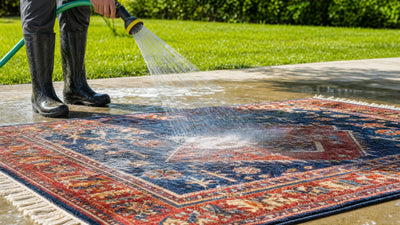
Lay the rug flat in a sunny room, or outside on a clean, dry driveway on a warm day, for two to four hours. Gentle warmth softens the backing so it settles flat under its own weight. Don't overdo it: prolonged direct sun can fade dyes, so a few hours is plenty, and flip the rug face-down if the colors are rich.

Method 6: Rug Pad, Tape, and Corner Grippers
A quality rug pad does double duty: it holds the rug flat against the floor and prevents the shifting that causes new ripples. Rug tape and corner grippers are purpose-made for corners that keep lifting; they stick to the underside of the rug, and good ones remove cleanly from the floor. See our guides on what size rug pad you need and which side of a rug pad goes down to get the setup right.

Curling Corners: A Slightly Different Problem
Corners curl for two reasons: backing memory from shipping, and everyday use, like a vacuum catching the edge or the corner sitting in a walkway. For shipping curl, use reverse rolling on just the corner or the weight method. For recurring curl on an older rug, corner grippers or rug tape are the lasting fix, and a rug pad underneath reduces the lifting that starts the curl in the first place.
A Bump in the Middle of the Rug
A rug bump in the middle usually means the rug has shifted or stretched slightly over a bare floor and the excess material has nowhere to go. Lift the rug, sweep or vacuum underneath, and re-lay it from the center outward, smoothing toward the edges. If the bump returns, add a rug pad; it grips the rug uniformly so the material can't migrate and gather. A persistent ripple in one spot can also be flattened with the towel-and-steam method above.

What to Avoid
Never iron a rug directly; always use a towel barrier and low heat. Don't put a rug in a dryer, even a small rug, since heat can crack latex backings and shrink natural fibers. Avoid folding a rug for storage; roll it instead, pile facing out, which is also how you should store a rug seasonally to prevent future creases. And resist the urge to aggressively bend a crease backward by hand; sharp counter-folds can crack a stiff backing on a budget rug.
Common Mistakes
The biggest mistake is judging a new rug in its first hour. Shipping wrinkles make any rug look worse than it is, and most settle within days. The second is skipping the rug pad, which prevents the majority of wrinkles, bumps, and curls from ever forming. The third is using high heat for speed; low and slow protects wool, and anything hotter risks permanent damage for a problem that time would have fixed free.
FAQ
How do you flatten an area rug fast?
Reverse rolling is the fastest reliable method: roll the rug tightly against the curl, leave it two to twelve hours, and unroll. For single creases, steam through a damp towel on low heat flattens the spot in under thirty minutes.
How long do new rug wrinkles take to go away?
With normal foot traffic, light shipping wrinkles relax in three to seven days. Deeper creases can take two weeks on their own, but reverse rolling or the weight method shortens that to a day or two.
How do you get creases out of a rug without an iron?
Use the weight method: stack heavy books or furniture on the crease for 24 to 48 hours. Sunlight warmth also works; lay the rug flat in a sunny spot for a few hours so the backing softens and settles.
How do you flatten a rolled rug that was in storage?
Unroll it in a warm room, let it acclimate for a day, then reverse roll any sections that still curl. Storage wrinkles respond to the same methods as shipping wrinkles; warmth and counter-pressure do the work.
Why are my rug corners curling?
New rugs curl from backing memory after being rolled for shipping. Older rugs curl from vacuum snags, foot traffic, and the lack of a rug pad. Reverse roll or weigh down new-rug curl; use corner grippers and a pad for recurring curl.
Keep Your Rug Flat for Good
Once the wrinkles are out, a rug pad is what keeps them out; it grips the rug, protects the floor, and extends the rug's life. If your current rug is past saving, or you're simply ready for an upgrade, browse our living room rugs, 8x10 rugs, and wool rugs. Every order ships free in the contiguous US with free 30-day returns. For more care guidance, see how to clean a large area rug at home and why wool rugs shed.

)